Running an electrical cabinet production line is a delicate balance of engineering precision, operational efficiency, and non-negotiable compliance with global safety and quality standards. For decades, my team and I have worked alongside manufacturers, electrical contractors, and industrial facility managers to ensure every cabinet rolling off our line meets the rigorous benchmarks set by international standards bodies—because a single misstep in compliance doesn’t just risk product rejection; it puts lives, infrastructure, and entire operations in jeopardy. Let’s break down what “compliance with international standards” actually means for an electrical cabinet production line, and why it’s not just a box to tick on a checklist. Electrical Cabinet Production Line
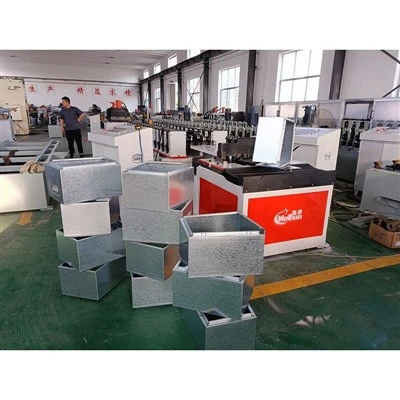
First, it’s critical to clarify that international standards for electrical cabinets aren’t vague guidelines—they’re codified requirements developed by consensus bodies like the International Electrotechnical Commission (IEC), which sets rules for electrical safety across 170+ countries, including IEC 60439, the core standard for low-voltage switchgear and controlgear assemblies. For our production line, compliance starts at the design stage, not when a final cabinet is being tested. Take, for example, our approach to busbar systems, the conductive cores that carry power through the cabinet. IEC 60439 mandates that busbars must withstand 30 times their rated current for one second to prevent thermal overloads, a requirement that sounds technical but directly prevents fires in crowded industrial settings. Last year, a client in Southeast Asia shared a story of a competitor’s cabinet failing this exact test, leading to a 12-hour shutdown of a semiconductor plant and $2.3 million in losses. That story drives every decision we make on the line: when we source copper for busbars, we don’t just go for the cheapest option—we verify it meets IEC’s conductivity thresholds, because a subpar material can’t meet the standard, no matter how skilled our assemblers are.
But compliance isn’t just about parts or design; it’s about consistent, repeatable processes across the production line. Many first-time clients assume compliance is a one-time audit at the end, but that’s a dangerous misconception. The IEC and other bodies like the Underwriters Laboratories (UL) require ongoing process controls to ensure every cabinet is identical in safety, not just the first one off the line. For our line, that means daily calibration checks on our punch presses, which shape cabinet enclosures to IEC’s IP20 rating—meaning they prevent fingers from touching live internal parts. Last quarter, our quality team caught a 0.2mm deviation in a press’s die alignment, which would have left a 0.3mm gap in an enclosure, violating IP20 and exposing workers to shock risk. We shut down the line immediately, recalibrated, and retested three batches of enclosures before resuming production. That kind of attention to process is non-negotiable; a single uncorrected deviation can lead to thousands of non-compliant cabinets reaching the market, with catastrophic consequences.
Another key pillar of compliance for our electrical cabinet line is documentation and traceability. Standards like IEC 60439 and UL 508A (for industrial control panels) require that every component, from circuit breakers to wiring terminals, is traceable back to its source. In an era of global supply chains, this means we don’t just rely on a supplier’s certificate of conformity—we log every lot number of circuit breakers, every roll of wire, and every piece of insulation in our digital database. Last year, a small batch of circuit breakers from a new supplier had a minor manufacturing defect that didn’t show up in routine component testing. Our traceability system flagged the batch before it left our plant, allowing us to recall only 12 cabinets instead of risking hundreds reaching clients. This level of traceability isn’t just a compliance requirement—it’s a promise to our clients that we can stand behind every product we make.
We also recognize that international standards are dynamic, and our production line can never rest on past compliance. Every two to three years, the IEC updates standards to reflect new technologies, like smart cabinets with IoT sensors for real-time power monitoring. The 2023 revision of IEC 60439 added requirements for cybersecurity in connected electrical equipment, a direct response to the growing risk of cyberattacks on industrial infrastructure. For our line, this meant investing in new testing equipment that can simulate cyber threats to cabinet firmware, training our assemblers to follow new wiring protocols for IoT modules, and updating our quality checklists to include cybersecurity validation. A few months back, a client in Europe was working on a smart factory project and chose our cabinets specifically because we had already integrated the new IEC cybersecurity requirements—something many competitors had yet to address. That’s the value of proactive compliance: it turns a basic product into a solution that meets the evolving needs of modern industry.
Of course, no discussion of compliance would be complete without addressing the human element. Our production line’s compliance depends on every team member, from the assembler who tightens a terminal to the quality inspector who runs a final safety test, understanding not just “what” to do, but “why” it matters. We hold weekly training sessions on international standards, using real-world case studies to show how a missed torque on a terminal (a requirement in IEC 60439) can lead to arcing, fires, and fatalities. Last year, a new assembler noticed a mismatch between a circuit breaker’s rating and the label on a cabinet’s door—something a standard audit might have missed because the breaker technically worked. But following our training, he flagged the discrepancy, and we corrected it before the cabinet was shipped. That’s the power of embedding compliance into the culture of the line, not just as a rulebook to follow.
Now, let’s be clear: compliance with international standards doesn’t have to mean sky-high costs or endless delays. We’ve optimized our line to meet all requirements without sacrificing efficiency, because we know clients need cabinets that are both safe and on schedule. For example, our in-house testing lab is accredited to IEC 17025 standards, which means we can run compliance tests in-house instead of outsourcing, cutting down lead times by an average of 10 days. We also work closely with clients to navigate regional variations in international standards—some countries adopt IEC directly, while others have their own national standards that align closely, like Canada’s CSA C22.2 or Australia’s AS/NZS 3112. Our team is familiar with all of these, so we can tailor our production line to meet whatever standards a client’s project requires, whether it’s a factory in Germany or a mine in South America.

At the end of the day, every cabinet we build is a promise: that it will protect workers, keep operations running smoothly, and withstand the test of time and rigorous safety checks. Compliance with international standards is the foundation of that promise. If you’re a manufacturer, industrial project manager, or electrical contractor looking for an electrical cabinet production line that doesn’t just meet minimum requirements, but exceeds them, reach out to our team to discuss your project. We’ll walk you through our process, share case studies of our compliance in action, and help you find the right solution for your needs.
Cable Tray Roll Forming Line References
International Electrotechnical Commission. (2021). Low-voltage switchgear and controlgear assemblies (IEC 60439-1:2019). Geneva, Switzerland: Author.
Underwriters Laboratories Inc. (2022). Industrial control panels (UL 508A). Northbrook, IL: Author.
CSA Group. (2023). General requirements for electrical equipment (CSA C22.2 No. 0-18). Toronto, ON: Author.
ISO/IEC 17025:2017. (2017). General requirements for the competence of testing and calibration laboratories. Geneva, Switzerland: International Organization for Standardization.
Weifang Yue Jun Machinery Co., Ltd.
With abundant experience, we are one of the most professional electrical cabinet production line manufacturers in China. We warmly welcome you to buy durable electrical cabinet production line made in China here from our factory. We also accept customized orders.
Address: Kuiwen District, Weifang City, Shandong Province
E-mail: adrian@yuejunmachinery.com
WebSite: https://www.yuejunmachinery.com/
