Hey there, I’m Mia, and I’ve been running this custom printed PVC film supply business for over 7 years now—so trust me, I get how frustrating it is when a client orders printed PVC film for a project and it starts warping, melting, or fading within a few weeks because they didn’t check the heat resistance. This is hands down one of the most common questions I get every single week, and honestly? It’s the stuff that makes or breaks a lot of small projects (and even big ones, like retail displays or product packaging). Let’s break down what custom printed PVC film’s heat resistance actually is, how it works, and what you need to know before you place your order. Custom Printed PVC Film
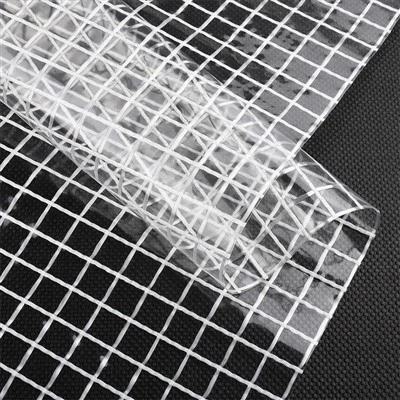
First off, let’s get one thing straight: not all custom printed PVC film is created equal. When we print PVC film for clients, we aren’t just slapping ink on a flat sheet—we’re dealing with three key components that all affect heat resistance: the base PVC resin itself, the printing inks we use, and any coatings or laminations we add post-print. A lot of new clients come in thinking “PVC is PVC” and assume it can handle high heat the same way, but that’s such a mistake. Let’s start with the base PVC because that’s the foundation.
PVC (polyvinyl chloride) has a basic melting point that hovers around 160°C to 210°C, right? But wait—raw PVC without any additives starts breaking down around 140°C, releasing that weird chlorine smell and getting all brittle. That’s why we add plasticizers and stabilizers when we make custom printed PVC film for clients who need flexibility. The plasticizers change the “glass transition temperature” (let’s call that Tg for short, and yeah, I’ll use that shorthand later since it’s way easier than saying glass transition temperature every time) — Tg is the temp where plastic goes from hard and glassy to soft and rubbery. For standard flexible PVC film (which is what 90% of our custom printed orders are), Tg is usually around -10°C to 0°C, so it stays pliable even in cold storage, but the heat resistance cap here is different. Our standard grade flexible printed PVC can handle continuous use at temps up to 60°C (140°F) max. That’s not a random number—we test every batch before it leaves our warehouse. If you leave a roll of our standard custom printed PVC sitting in a hot car on a summer day, that’s usually around 65°C to 70°C inside the car, so you might notice slight warping or the edges curling a little after a few hours. No, it won’t melt immediately, but it won’t look as crisp as it did when you got it.
Now, the biggest variable here is the printing ink. This is where I see most clients go wrong. A lot of people think “PVC ink is PVC ink” too, but nope—there are three main types of inks we use for custom printed PVC, and each has totally different heat tolerance. Solvent-based inks are the OG, we use them for super durable, outdoor-facing prints (like for billboards or storefront signs). Those can handle up to 80°C (176°F) continuous heat, and short bursts (like if you accidentally leave them in a hot loading dock for an hour) up to 100°C (212°F) no problem. Then there’s water-based ink—we use these for eco-friendly orders, like food packaging inserts or kids’ craft supplies. Water-based inks are cheaper and non-toxic, but their heat resistance is way lower: only up to 50°C (122°F) continuous, and they’ll start to smudge or fade above that. That’s why you never see water-based printed PVC on a hot window display, right? Lastly, there’s UV-cured ink, which is super popular right now for custom stuff like product labels or high-end cosmetic packaging. These are the most heat-resistant: up to 90°C (194°F) continuous, and short bursts up to 120°C (248°F). I had a client last year who made custom printed PVC labels for coffee cups (wait, not the hot cup—just the sleeve wrap that gets placed on the cup, which is exposed to steam from hot coffee). They used UV ink, and after 3 months of testing in a cafe, the colors didn’t fade at all. Game changer.
But wait—what if you need custom printed PVC film for something that’s going to be exposed to higher heat? Like, say, industrial parts that get close to a machine, or packaging for processed food that goes through a shrink tunnel? A lot of people think PVC can’t handle that, but we have a special high-heat grade PVC we offer for exactly those cases. It’s still flexible, but we modified the resin with heat stabilizers that bump the continuous heat resistance up to 105°C (221°F), and short bursts up to 150°C (302°F). We test this stuff rigorously—we bake samples in an industrial oven for 24 hours at 110°C, pull them out, check for warping, ink fading, or brittleness, and only send them out if they pass. Last year, an auto parts manufacturer ordered a run of custom printed PVC for their under-hood warning labels—those get super hot, like 120°C when the engine’s running. They went with our high-heat grade and UV ink, and they told me 6 months later that not a single label had curled or faded. That’s exactly what this grade is for.
Now, let’s talk about the stuff that people don’t think about that affects heat resistance: coatings and laminations. Sometimes clients add a clear coating on top of printed PVC for extra scratch resistance, or laminate it with another material, like PET or BOPP. A matte or gloss laminate can actually help boost heat resistance a little—like, if you have standard PVC printed with solvent ink, adding a PET laminate will bump that continuous heat capacity from 80°C to 85°C. But if you use a cheap vinyl laminate? That’s a no-go—cheaper laminates can melt or separate from the PVC at temps over 70°C, which ruins the entire print. I had a client a couple years ago who ordered a bulk run of custom printed PVC for outdoor patio banners, used a cheap laminate from another supplier, and half the banners started bubbling in the middle of a heatwave (we’re talking 90°F days, not even 100+). We told him what went wrong, and when he reordered with our standard grade and our premium PET laminate, the banners lasted the whole summer with no issues. Moral of the story: don’t skip the coating, and don’t skimp on the laminate if you’re working in heat.
Another thing that’s easy to overlook: how you process the printed PVC film after you get it. Like, if you’re heat-sealing custom printed PVC film into a bag or a wrapper? You have to be careful with the temp of the heat sealer. If your sealer is set to 150°C, that’s way too high for standard grade PVC—you’ll melt the edges, and the ink will bleed into the seal. For standard grade, keep heat seal temps between 100°C and 120°C, for high-heat grade, you can go up to 140°C max. We always include a little tech sheet with every order that has specific processing tips, but a lot of clients toss it and wonder why their order got ruined. That’s on both sides, honestly—we make sure the info is there, but you have to actually read it.
Wait, what about low heat? No, wait, the question is about heat resistance, but a quick side note: people sometimes ask, but heat resistance also ties into cold, but that’s not the point here. Let’s get back to common myths. A lot of people think PVC is bad for food packaging because of heat, but that’s not true if you use the right grade. We have food-grade custom printed PVC film that meets FDA standards, and our standard grade is safe for food contact as long as it’s not exposed to temps over 60°C. If you’re packaging hot food that goes through a heat shrink process, we have a food-safe high-heat grade that works for that—we tested it ourselves with a shrink tunnel set to 120°C, and it didn’t leach any chemicals or deform. That’s a big one for food and beverage clients, because they’re so worried about safety.
Let’s also talk about how we test our custom printed PVC film’s heat resistance, because I always tell clients to ask their suppliers for test data if they’re ordering for a high-heat project. We do two types of tests: continuous heat testing and cyclic heat testing. Continuous is when we keep a sample at a set temp for 72 hours straight, check it every 24 hours for warping, ink adhesion, color fading, and brittleness. Cyclic is when we heat it to 100°C for 8 hours, cool it to -10°C for 16 hours, repeat for 7 days—this simulates real-world conditions, like a product being shipped in a hot truck then stored in a cold warehouse. For our high-heat grade, we pass both tests at 105°C continuous and 150°C cyclic, which is way higher than most suppliers’ standard grade.
What about edge cases? Like, if you need custom printed PVC film that’s going to be exposed to flame? Wait, that’s a different thing—flame resistance, not heat resistance, but a lot of clients mix them up. We do offer flame-retardant custom printed PVC, but that’s for things like stage backdrops or electrical enclosures, not the standard stuff. That’s a whole different set of additives, so if you need that, you have to specify it upfront, because it changes the heat resistance a little (flame-retardant grade max continuous heat is around 90°C, which is lower than our high-heat grade, but it’s resistant to ignition, which standard isn’t).
Let’s wrap this up with what you actually need to do before you order custom printed PVC film, because that’s the whole point of this post. First, figure out exactly what your project’s heat exposure is. Is it going to be in direct sunlight for 8 hours a day (that’s 50°C to 60°C max)? A hot warehouse (same)? Near a running engine (100°C+)? Exposed to steam from hot drinks (70°C to 80°C)? Once you know that, pick your PVC grade: standard for up to 60°C, high-heat for up to 105°C. Second, pick your ink type: solvent for outdoor/high heat, UV-cured for medium heat, water-based only for indoor low-heat. Third, don’t skip the premium laminate or coating if you need it—cheap add-ons are worth saving a few bucks and ruining your whole project. Fourth, when you get your order, follow the processing tips we send with it—don’t crank your heat sealer too high, don’t leave it in a hot truck for 3 days, that stuff matters.
I’ve been doing this long enough that I’ve seen every mistake in the book: a client who ordered 10,000 custom printed PVC labels for a fast food chain with water-based ink, only to have them fade after a week of sitting on hot soda dispensers; a stage designer who ordered standard PVC for backdrops that got near the stage lights, melting mid-show; a packaging company that used a cheap laminate, leading to bubbling on thousands of units. All of those could’ve been avoided by just talking through the heat requirements with a supplier who knows their stuff.

If you’re working on a project right now and you’re not sure what custom printed PVC film you need—whether it’s for packaging, signage, industrial parts, food products, whatever—don’t guess. Hit us up, we’ll walk you through every step, send you test samples if you want, and make sure your order holds up to whatever heat it’s exposed to. No jargon, no hidden fees, just honest advice from someone who’s been in the game for years. Don’t let heat ruin your custom printed PVC project—reach out and let’s make sure it’s built to last.
PVC Printing Film References
- Marks’ Standard Handbook for Mechanical Engineers, 11th Edition, McGraw-Hill, 2007, Section 14: Polymer Materials, Polyvinyl Chloride (PVC) Properties
- ASTM D3451-17, Standard Test Method for Heat Resistance of Flexible PVC Sheeting and Film, ASTM International, 2017
- Printwiki: The Specialty Graphic Imaging Association (SGIA) Ink Property Database, UV-Cured and Solvent-Based Ink Heat Resistance Specifications, 2022
- FDA Food Contact Notification (FCN) Database, Flexible PVC Film for Food Packaging Applications, 2021
Nantong Dahe Composite New Material Technology Co., Ltd.
Address: South Side of Pinghai Highway, Pinghe Village, Dongshe Town, Tongzhou District, Nantong City, Jiangsu Province, China
E-mail: nantongdahe@outlook.com
WebSite: https://www.cndahetech.com/
