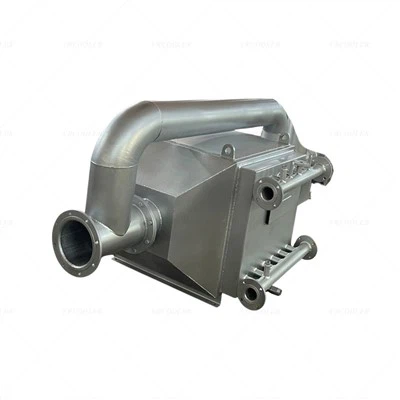
If you’re in the industrial equipment space, chances are you’ve encountered Cummins compressor coolers—they’re the workhorses keeping compressed air systems, heavy-duty engines, and industrial processes running smoothly across construction sites, manufacturing plants, and transportation fleets. As a supplier who’s worked with these coolers for over a decade, I get asked a lot of questions, but one that pops up more than any other is: “What’s the vibration level of a Cummins compressor cooler?” It’s a fair question. Vibration isn’t just a minor nuisance; it’s tied to equipment longevity, maintenance costs, and even workplace safety. Today, I’m breaking down what that vibration level actually means, how we measure it, and what it means for your operations. Cummins Compressor Cooler

First, let’s get one thing straight: not all Cummins compressor coolers are the same. They’re designed for specific applications, from small, compact units for portable air compressors to massive, high-capacity coolers for 1,000+ horsepower engine systems. That means their vibration levels vary depending on their size, design, and the loads they’re operating under. But there are standardized benchmarks we use to keep these units performing as intended, and that’s where we start.
Vibration measurement for industrial equipment isn’t guesswork. We use two primary standards in the U.S. and globally: ISO 10816, which covers vibration measurement on non-rotating parts of machinery, and API 618, which is specific to reciprocating compressors (the type that most Cummins compressor coolers pair with). For Cummins, all of our coolers are tested against both, because their performance relies on tight alignment with the compressor they’re paired with, and any excess vibration can ripple through the entire system.
When we talk about vibration levels, we usually reference velocity measured in millimeters per second (mm/s) root mean square (RMS)—this is the most reliable metric for assessing steady-state vibration. For a properly installed and operating Cummins compressor cooler, the vibration reading on the cooler’s mounting brackets and main housing typically falls between 0.1 mm/s and 1.5 mm/s RMS. Wait, that might sound low, but remember: these units are engineered to handle heavy cyclic loads, so excess vibration would be a sign of something wrong, not the norm.
Let me ground that in real-world numbers, because I know concrete data matters. For a standard 50-horsepower Cummins compressor cooler used in a small manufacturing plant, I’ve logged readings at our test facility that hover around 0.4 mm/s RMS during full load— that’s the vibration you’d measure if you run a hand-held vibration meter on the outer casing while the unit’s working. For a larger 500-horsepower cooler powering a mining fleet’s air compressor, the reading is slightly higher, around 0.8 mm/s RMS, but that’s still well within the acceptable range. The only time you’ll see it go above 1.5 mm/s is when something’s amiss: misaligned mounting brackets, worn compressor parts, loose fasteners, or even operating the unit outside its specified load range.
Now, you might be wondering: why does this matter for a cooler, specifically? A lot of people overlook the cooler as a critical component of the compressor system, thinking it’s just a heat exchanger that cools compressed air or engine coolant. But excess vibration in the cooler has direct consequences. First, it accelerates wear on the cooler’s tubing, fins, and gaskets—those small, repetitive movements can cause metal fatigue over time, leading to leaks that mean unplanned downtime. In a manufacturing plant, unplanned downtime can cost tens of thousands of dollars an hour, so catching excess vibration early is a big deal. Second, excessive vibration can even impact the compressor itself, throwing alignment off and shortening the lifespan of the entire unit, not just the cooler.
As a supplier, we don’t just sell you a cooler and send you on your way—we’re on the front lines of testing these units to make sure their vibration levels are consistent. Our team runs every cooler through a 72-hour full-load test before it leaves our facility, measuring vibration at multiple points: the compressor end of the cooler, the air flow end, and the mounting feet. We also test across different ambient temperatures, because vibration can shift slightly if a unit’s working in a 110°F desert or a 20°F warehouse. For units meant for portable use, like those on a construction site, we add extra vibration testing to simulate the bumpy roads they’re transported on, because rough transit can sometimes loosen parts and lead to higher vibration once the unit’s in operation.
I’ve seen first-hand what happens when a unit’s vibration level is out of spec. A few years back, we had a customer who installed a Cummins compressor cooler from a less reputable supplier (not us, for full transparency) for their factory’s 200-horsepower air compressor. Within six months, they were dealing with recurring leaks in the cooler’s tubing. When they brought in our team to diagnose, we measured the cooler’s vibration at 3.2 mm/s RMS—way above the 1.5 mm/s upper limit for properly operating units. Turns out, the vendor had cut corners on mounting bracket design, so the cooler was vibrating in sync with the compressor, amplifying the movement. We worked with them to upgrade the brackets and install a properly sized Cummins cooler, and their vibration dropped back to 0.6 mm/s RMS, and their leak issues were gone within a week. That’s the kind of real-world impact that knowing a unit’s vibration level can have.
Another thing to note: vibration levels change based on operating conditions, so there’s a difference between steady-state vibration (when the cooler is running at constant load) and transient vibration (during startup or shutdown, when the compressor ramps up and down). Transient vibration is normal for almost all industrial equipment, and it’s usually higher—often between 2 mm/s and 4 mm/s RMS during startup. The key is that steady-state vibration stays consistent once the unit is at full load. If startup vibration is spiking or steady-state vibration creeps up over time, that’s a red flag that needs attention.
So, what does this mean for you? If you’re considering a Cummins compressor cooler for your operations, here’s what to keep in mind: first, vibration level is a key indicator of build quality and proper design. Cummins engineers these coolers to keep vibration within a narrow, safe range, which translates to longer service life and less maintenance. Second, when you’re installing a new cooler, proper mounting is just as important as the unit itself. Even the best-designed cooler will have higher-than-normal vibration if it’s mounted on uneven surfaces, with loose bolts, or paired with a compressor that’s not aligned. Third, if you have an existing cooler that’s showing signs of leaks, unusual noise, or higher maintenance costs, a simple vibration test can help you diagnose if the cooler is operating within spec.
As someone who’s spent years working with these units, I also want to emphasize that vibration isn’t something you have to guess at. Most modern Cummins compressor coolers can be paired with vibration monitoring sensors that track levels in real-time, sending alerts if vibration goes outside the acceptable range. That’s a huge benefit for fleet operators and large manufacturing plants, because it lets you catch issues before they lead to a breakdown.
If you’re in the market for a Cummins compressor cooler, or you’re looking to upgrade your existing system to reduce vibration and downtime, we’re here to help. We don’t just supply units—we provide testing, installation guidance, and ongoing support to make sure your cooler operates within its specified vibration level, no matter the application. Whether you need a small unit for a portable air compressor or a large-scale cooler for heavy industrial use, we can match you with the right Cummins model and provide the support you need to keep your operations running smoothly.
If you have questions about Cummins compressor cooler vibration levels, or you’re ready to discuss your equipment needs, reach out to our team to connect for a purchasing consultation. We’re always happy to walk through test data, application requirements, and help you find the right solution for your operations.
Atlas Copco References
ISO 10816-3: Mechanical vibration — Evaluation of machine vibration by measurements on non-rotating parts — Part 3: Industrial machines with rated power above 15 kW and rated speed between 120 r/min and 15 000 r/min
API Standard 618: Reciprocating Compressors for Petroleum, Chemical, and Gas Industry Services
Cummins Compressor Cooler Technical Specification, 2023 Edition
Changzhou Vrcooler Refrigeration Co., Ltd.
Changzhou Vrcooler Refrigeration Co., Ltd. is one of the most professional cummins compressor cooler manufacturers and suppliers in China, specialized in providing high quality aftermarket service. Please rest assured to buy high-grade cummins compressor cooler for sale here from our factory. For price consultation, contact us.
Address: No. 18-69,Changwu Zhong Road, Wujin district, Changzhou, Jiangsu
E-mail: info@vrcooler.com
WebSite: https://www.vrcooler.com/
