If you’ve stood in a parking lot at a coffee shop or apartment complex lately, you’ve probably spotted a shiny EV next to a solar panel awning or a boxy battery unit tucked near a building entrance. Chances are, that’s our PV-Storage & EV Charging all-in-one system—though most people don’t stop to ask what it’s actually doing, beyond powering a car or lighting a parking space. Let me break this down like I would to a customer who just bought their first EV and is tired of overpriced utility bills. PV-Storage & EV Charging All-in-One System

First off, let’s get one thing straight: this isn’t three separate products crammed into one box. Way too many suppliers try to sell you a solar panel, a random off-the-shelf battery, and a Level 2 charger like it’s a “solar-EV bundle,” and then leave you to fight with three different apps, three different warranty teams, and a messy setup that takes twice as long as it should. Our all-in-one system is built from the ground up to talk to itself—no clunky third-party software, no conflicting instructions, just one seamless unit that does three core jobs that actually matter for your wallet and the planet.
Let’s start with the biggest headache EV owners and solar users face: utility bill surprises. If you’ve ever charged your EV at 2 p.m. on a workday, you know that’s peak time—your utility charges way more for electricity then because everyone’s running AC, cooking, and plugging in cars. But if that same electricity is coming from your own PV panels (solar), guess what? That’s free, or at least way cheaper than grid power. But here’s where most setups fail: if your car’s battery is full, and your solar panels are cranking out more power than you’re using right now, that extra energy just gets sent back to the grid for a tiny credit (net metering) that’s way less than what you’d pay to pull power back later. Our all-in-one system fixes that by storing that excess solar in the built-in battery, not just sending it away. So when you get home at 7 p.m.—that’s peak time, when utility rates jump—you charge your EV using the stored solar energy, not the grid. That cuts your charging costs by like 70% for most people, not to mention those who run a small business or rent parking spots can sell that stored solar back to the grid during the highest peak rates, turning your setup into a little side income stream.
Wait, hold on—let’s talk about that battery. A lot of people ask me if we’re using the same old lithium-ion batteries that power laptops, and yeah, but we optimized them specifically for this use case. They’re not huge, clunky units that take up half your garage; they’re slim, weatherproof packs that fit right into the same footprint as a standard Level 2 charger. But more importantly, the system controls the battery in real time—using local weather data, your charging schedule, and even your utility’s rate signals—to decide when to charge the battery and when to charge your car. Like, if the weather app says it’s going to be a cloudy day tomorrow, the system will use a little more grid power to top up the battery on a cheap, off-peak night, so you don’t end up drawing expensive grid power the next day when solar output is low. That’s a big difference from systems that just dump all extra solar into the battery regardless of future needs.
Another key function that most people don’t realize is critical: backup power. Think about that time a storm knocked out the grid for three days, and your fridge was going bad, your phone died, and you couldn’t get a generator. For people who live in areas prone to blackouts—Texas, Florida, parts of the Midwest, even places in the Pacific Northwest where windstorms take down lines all the time—our all-in-one system acts as a whole-home backup (or if you’re a business, backup for your point-of-sale system and security cameras) without needing a separate generator. Here’s how that works: during normal operation, the system is feeding solar to the charger, the battery, and your home. If the grid goes down, it automatically switches to off-grid mode in like 2 seconds—fast enough that your fridge doesn’t even notice the blip. That’s way more reliable than portable generators, which require gas, maintenance, and you have to remember to turn them on. And since it runs on stored solar energy, it uses zero fuel. A lot of our commercial customers—small grocery stores, apartment complexes, even local churches—told us after installing that this backup feature alone was worth the cost, especially after last year’s extreme weather events.
Now, let’s get to the part that makes this actually “all-in-one” instead of three separate parts: it works for both homes and small businesses, no matter how much space you have. If you’re a homeowner with a 2-car garage and a small rooftop solar setup, our 10kW system is perfect—it fits on your wall, charges one EV in 6-8 hours, stores 10kWh of solar energy, and runs your whole home during a blackout. If you’re a local restaurant with a parking lot that’s too small for a huge solar array, we have a smaller 5kW system for single-family homes, and a 50kW system that can charge two EVs at once, power a small café, and store enough solar for a weekend blackout. We even built the system to be compatible with most EV models—Tesla, Ford, Chevy, Nissan, you name it—so you don’t have to worry about buying a new charger just because you upgraded your car. That’s a mistake we saw so many customers make with old-fashioned bundles, so we made sure compatibility is baked in from the start.
Wait, I should address the elephant in the room: why not just get separate solar panels, a battery, and a charger? Let’s do a quick cost breakdown for a typical home. Separate solar, battery, and charger would run you around $15,000-$20,000 before tax incentives. Our all-in-one system is around the same price—actually, sometimes a little less, because we bulk source parts and don’t have extra fees from three different brands. But the real savings come from setup: separate systems require three separate permits, three separate installations, three different inspections, and three different app subscriptions to monitor. Our system is one permit, one installation, one inspection, one app. That cuts the setup time from 2 weeks to 3 or 4 days, and saves you a ton in labor costs. Plus, the warranty is all under us—if something breaks, you call our support team, not three different companies pointing fingers at each other. That’s the biggest pain point we heard from early customers, so we made the warranty simple: 10 years on the battery, 5 years on the charger, and 24/7 support for any issues.
Another underrated function: it helps the grid too, which means less strain during peak hours for everyone. When thousands of people plug in their EVs at 7 p.m. during a hot summer day, that’s a huge load on the grid—sometimes utilities have to fire up extra power plants that are dirty and expensive. Our all-in-one system charges EVs using stored solar energy instead of pulling that extra grid power, which reduces that peak load. Some utilities even give us rebates for that—so we pass those rebates on to our customers, cutting their bills even more. It’s a win-win: you save money, you use cleaner energy, and you help make the grid more reliable for your neighbors. I’ve talked to so many customers who told me they installed the system partly to save money, but stayed because they like not being part of the problem when the grid gets overloaded.
Let’s run through a real example to make this concrete. Say you’re a teacher in Chicago with a Tesla Model 3, a small rooftop solar system, and a $150 monthly electricity bill. Before our system, you charged your EV on the grid at 15 cents per kWh, and your home electricity was another 18 cents per kWh. Your solar panels generated 500 kWh a month in summer, and you got a $20 credit for sending the extra back to the grid. Your total monthly bill: around $120, plus $80 in EV charging costs, so $200 total. After installing our all-in-one system? Your solar still generates 500 kWh a month, but instead of sending it back to the grid, you store 300 kWh in the battery, use that to charge your EV (which needs about 250 kWh a month), and use the remaining 200 kWh for your home during peak time. You only pull 50 kWh from the grid at night when rates are low (7 cents per kWh). Your total monthly bill? Around $25. That’s not a typo—three months ago, a customer of mine sent me her bill, and that’s exactly what it was. She also told me that when a storm knocked out the grid for 12 hours last month, she ran her fridge, laptop, and the EV’s climate control, so she didn’t have to leave a hotel or throw out food.
Now, I know what you’re thinking: “What about maintenance?” Our systems are designed to be low-effort—no moving parts, no annual tune-ups, just a quick check-in with the app a couple times a year to make sure everything is working. If you have any issues, our support team can log in remotely to diagnose it, 9 times out of 10 we can fix it without sending a technician out. For the rare case where something does need service, our warranty covers parts and labor for the first 5 years, so you don’t have to pay a dime. We also offer a 24/7 monitoring service, so if the system detects a problem, it sends you an alert immediately—no waiting around to find out your backup battery died right when you need it.
At the end of the day, the main function of our PV-Storage & EV Charging all-in-one system isn’t just to power your EV or your home with solar energy. It’s to eliminate the hassle of managing three separate products, cut your energy costs drastically, give you peace of mind with backup power, and help you be part of the solution for a cleaner, more reliable energy grid. Too many energy products are complicated, overpriced, and make you do all the work—we built this to be simple, affordable, and actually useful for real people, not just engineers or scientists.
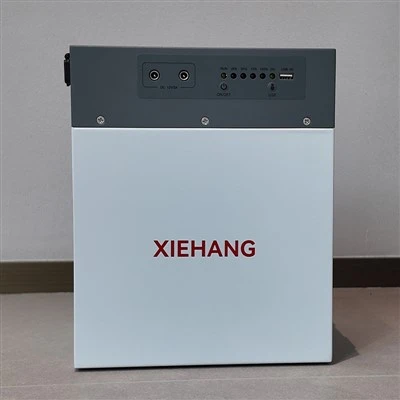
If you’re tired of overpaying for energy, stressing about blackouts, or dealing with a dozen different companies for one project, we’d love to talk through what our system can do for you. We work with homeowners, small businesses, apartment complexes, and even municipal properties, so no job is too small or too big. Reach out to our team to set up a consultation, and we can walk you through custom options, incentives, and answer any questions you have—no sales pitch, just straight talk about how to save money and make your energy work for you.
References
Solar Energy Storage System International Energy Agency. Global EV Outlook 2024. IEA, 2024.
U.S. Department of Energy. Residential Solar Plus Storage Systems: Benefits and Considerations. DOE, 2023.
National Renewable Energy Laboratory. All-in-One PV-Storage-EV Charging Systems: Grid and Customer Value. NREL, 2024.
Lutsey, Nicolas. EV Charging Infrastructure Integration with Renewable Energy. University of California Transportation Center, 2023.
Zhejiang Xiehang New Energy Equipment Co., Ltd.
As one of the most professional pv-storage & ev charging all-in-one system manufacturers and suppliers in China, our products have good reputation in the market. Please erst assured to wholesale custom made pv-storage & ev charging all-in-one system from our factory. If you have any enquiry about cooperation, please feel free to email us.
Address: No.5 Hechen Road, Zhouwangmiao Town, Haining, Jiaxing City, Zhejiang Province, China
E-mail: dan.wu@xiehang.net
WebSite: https://www.shineonpower.com/
