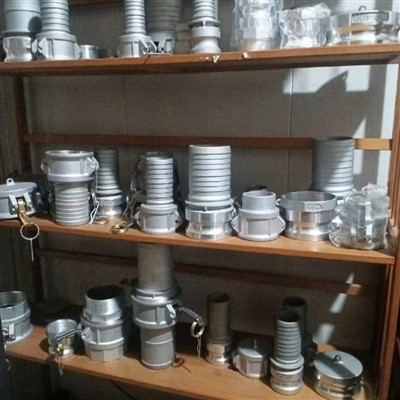
As a seasoned supplier in the field of industrial & fluid control parts, I’ve witnessed firsthand the critical role that quality inspection plays in ensuring the reliability and performance of these components. In this blog post, I’ll share the standards we adhere to when conducting quality inspections, as well as the importance of these benchmarks in maintaining product excellence. Industrial & Fluid Control Parts
I. Material Integrity
The foundation of any high – quality industrial & fluid control part lies in its materials. We source materials from trusted suppliers, and the first step in our quality inspection process is to verify the material integrity.
For metal parts, we conduct a series of chemical composition analyses. Spectroscopy is a commonly used technique, which allows us to accurately determine the percentage of various elements in the metal. For example, in the production of valve bodies made of stainless steel, we need to ensure the correct proportion of chromium, nickel, and other elements. A deviation in the chemical composition can significantly affect the corrosion resistance and mechanical properties of the part.
We also assess the physical properties of materials. Hardness testing is performed using methods such as the Rockwell or Brinell hardness tests. This helps us ensure that the material has the appropriate strength to withstand the operating conditions. For instance, in hydraulic cylinders, the piston rods need to be hard enough to resist wear from the seals and the fluid pressure, but also not too brittle to avoid cracking under stress.
II. Dimensional Accuracy
Precise dimensions are crucial for the proper functioning of industrial & fluid control parts. Even a minor deviation can lead to leaks, improper fitting, or reduced performance.
We use a variety of measuring tools to check dimensional accuracy. Coordinate measuring machines (CMMs) are the gold standard in our inspection process. They can measure complex geometries with high precision, allowing us to verify that each part meets the design specifications. For example, when manufacturing a flow control valve, the diameter of the valve seat, the length of the stem, and the angle of the valve disc all need to be within a very narrow tolerance range.
In addition to CMMs, we also use calipers, micrometers, and gauges for more basic dimensional checks. These tools are used for quick and routine inspections during the production process. For instance, when producing O – rings, we use calipers to measure the inner and outer diameters and the cross – sectional thickness to ensure they are within the specified limits.
III. Surface Finish
The surface finish of industrial & fluid control parts can have a significant impact on their performance. A smooth surface finish reduces friction, improves sealing, and enhances corrosion resistance.
We evaluate the surface finish using profilometers, which measure the roughness, waviness, and form of the surface. For parts that come into contact with fluids, such as pipes and fittings, a smooth surface finish is essential to prevent the accumulation of debris and to ensure a laminar flow. In pump impellers, a proper surface finish reduces turbulence, improving the efficiency of the pump.
We also pay attention to the presence of surface defects such as scratches, porosity, and cracks. Visual inspections are carried out under appropriate lighting conditions, and in some cases, non – destructive testing methods such as magnetic particle inspection or ultrasonic testing are used to detect hidden surface and subsurface defects.
IV. Performance Testing
Once the materials, dimensions, and surface finish are verified, we conduct performance testing to ensure that the parts can operate as intended under real – world conditions.
For fluid control valves, we test their flow characteristics. This includes measuring the flow rate at different pressure differentials, checking the valve’s ability to open and close smoothly, and verifying its shut – off capability. We use specialized test rigs that simulate the actual operating conditions of the valve in a pipeline system.
In the case of pumps, we test their head – flow performance, efficiency, and cavitation resistance. The pump is connected to a test loop, and we measure parameters such as the inlet and outlet pressures, flow rate, and power consumption. These tests help us identify any issues with the pump’s design or manufacturing that could affect its performance in the field.
V. Sealing Performance
Sealing is a critical aspect of industrial & fluid control parts. Leaks can lead to product failures, safety hazards, and environmental pollution.
We conduct sealing performance tests using various methods. For static seals, such as gaskets, we use pressure – testing fixtures to apply a specified pressure and check for any leakage over a period of time. For dynamic seals, such as shaft seals in pumps, we test their ability to prevent fluid leakage while the shaft is rotating.
We also consider the compatibility of the sealing materials with the fluids they will come into contact with. Chemical resistance tests are performed to ensure that the seals do not degrade or swell when exposed to the specific fluids in the system.
VI. Durability and Fatigue Testing
Industrial & fluid control parts are often subjected to repeated stress and cyclic loading during their service life. Durability and fatigue testing are essential to ensure that the parts can withstand these conditions without failure.
We use fatigue testing machines to simulate the cyclic loading that the parts will experience in the field. For example, in the case of springs used in valves, we subject them to a specified number of compression and extension cycles to evaluate their fatigue life.
We also conduct accelerated life tests, where the parts are exposed to more severe operating conditions than normal to simulate long – term use in a shorter period. This helps us predict the reliability of the parts and identify any potential design or manufacturing flaws that could lead to premature failure.
Why are these inspection standards so important? Firstly, they ensure the safety of the end – users. Faulty industrial & fluid control parts can cause disasters in industrial settings, such as chemical leaks, explosions, or system failures. Second, high – quality parts reduce maintenance costs and downtime. When parts are reliable, they need less frequent replacement and repair, which translates into significant cost savings for our customers. Third, our commitment to these quality standards helps us build trust with our customers. By providing parts that meet or exceed industry benchmarks, we establish long – term relationships based on reliability and performance.
Stamped Parts If you are in the market for industrial & fluid control parts and are looking for a supplier who adheres to the highest quality inspection standards, I invite you to reach out for a procurement discussion. We are confident that our products, backed by rigorous quality inspections, will meet your requirements and exceed your expectations.
References
- ASME (American Society of Mechanical Engineers) Boiler and Pressure Vessel Code
- ASTM (American Society for Testing and Materials) Standards on Metals and Materials
- ISO (International Organization for Standardization) Standards for Fluid Systems and Components
Yuyao Aozhou Metal Products Co., Ltd.
Address: No.6, Nanbailonggang, Wuma Industrial Zone, Lubu Town, Yuyao City
E-mail: xqr-2316@163.com
WebSite: https://www.cnaozhou.com/
