Hey there! I’m part of a supplier team for radar flow meters, and I get asked a lot about how turbulence affects our meter’s measurement. So, I thought I’d break it down in this blog post. Radar Flow Meter
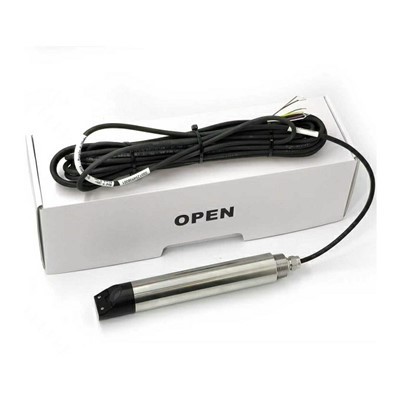
Understanding Turbulence
First things first, let’s talk about what turbulence is. Turbulence occurs when fluid flow becomes irregular, with chaotic changes in pressure and velocity. In the context of water flow, it can be caused by a bunch of things. For example, rough surfaces in a channel like rocks or uneven concrete can disrupt the smooth flow and create turbulent zones. Also, sudden changes in the channel’s shape, like bends or contractions, can make the water flow go haywire.
When you’ve got a calm, laminar flow, the water moves in smooth, parallel layers. But in a turbulent flow, these layers break up, and you get eddies and swirls. These eddies are like little whirlpools that can move in all directions, and they make the flow a lot more complex to measure.
How Radar Flow Meters Work
Before we dive into how turbulence affects our radar flow meters, let’s quickly go over how they work. Our radar flow meters use a microwave signal to measure the surface velocity of the water. The meter sends out a microwave signal that bounces off the water’s surface and back to the meter. By analyzing the change in frequency of the reflected signal (Doppler effect), we can figure out how fast the surface of the water is moving.
To get the total flow rate, we also need to know the cross – sectional area of the water flow and the velocity distribution throughout the channel. This usually involves some calibration and the use of standard flow equations.
Effects of Turbulence on Radar Flow Meter Measurement
1. Surface Velocity Measurement
Turbulence can really throw a wrench in the works when it comes to measuring surface velocity. Since our radar flow meters rely on the Doppler effect to measure velocity, the chaotic motion of the water surface due to turbulence can cause inaccurate readings.
The eddies and swirls on the surface can make the microwave signal reflect in unpredictable ways. Instead of getting a clear, consistent reflection from a relatively smooth surface, the signal can bounce off multiple small – scale disturbances. This can lead to a wide range of Doppler frequency shifts being detected, and the meter might have a hard time picking out the true surface velocity.
For example, if there’s a big eddy on the water surface, the radar signal might measure the velocity of that eddy instead of the overall downstream flow velocity. This can result in over – or under – estimating the true surface velocity, which is the starting point for calculating the flow rate.
2. Velocity Profile Assumptions
Most of the time, when we calculate the flow rate from the measured surface velocity, we make some assumptions about the velocity profile in the channel. In a laminar or well – behaved flow, we can use certain mathematical models to relate the surface velocity to the average velocity throughout the cross – section.
However, turbulence messes up these assumptions. The velocity profile in a turbulent flow is much more complex compared to a laminar flow. In a turbulent flow, the velocity can vary greatly not only from the surface to the bottom of the channel but also across the width of the channel.
Our radar flow meters are calibrated based on certain standard velocity profiles. When turbulence disrupts these profiles, the calibration might no longer be valid. For instance, if there’s a lot of turbulence near the sides of the channel, the velocity distribution will be different from what we expect, and using the standard calibration factors to convert surface velocity to average velocity can lead to significant errors in the flow rate measurement.
3. Signal Interference
Turbulence can also cause signal interference. As the water surface becomes more rough and irregular due to turbulence, there can be multi – path reflections of the radar signal. This means that the signal can take multiple paths to reach the meter after reflecting off the water surface.
These multi – path reflections can cause the signals to interfere with each other, creating a complex pattern of constructive and destructive interference. This interference can make it difficult for the meter to accurately detect the frequency shift of the reflected signal, which is crucial for measuring the velocity.
In some cases, the interference can be so severe that the meter might lose the signal altogether, or it might give very erratic readings that are completely off from the true velocity and flow rate.
Dealing with Turbulence
Now, you might be thinking, "That sounds like a real headache. Can your radar flow meters handle turbulence?" Well, we’ve put a lot of effort into making our meters as robust as possible in turbulent conditions.
Advanced Signal Processing
Our radar flow meters are equipped with advanced signal processing algorithms. These algorithms are designed to filter out the noise and interference caused by turbulence. They can analyze the raw Doppler frequency data and look for patterns that are consistent with the true surface velocity. For example, the algorithms can average out the frequency shifts over a certain period of time to reduce the impact of short – term fluctuations caused by eddies.
Calibration and Site – Specific Adjustments
We also know that every measurement site is unique, especially when it comes to turbulence. That’s why we offer on – site calibration services. Our technicians will visit your site and take measurements under different flow conditions. They’ll then adjust the meter’s calibration parameters to account for the specific turbulence characteristics of your channel.
For instance, if there’s a particular section of the channel that has a lot of turbulence due to a bend or a structure, we can fine – tune the meter to better handle those conditions. This way, we can improve the accuracy of the flow rate measurement even in the presence of turbulence.
Installation Considerations
Proper installation is crucial when dealing with turbulence. We recommend installing our radar flow meters in areas of the channel where the flow is as smooth as possible. For example, avoiding installation near sudden changes in the channel’s shape or close to any structures that might cause excessive turbulence.
If it’s not possible to find a completely smooth area, we can use flow – straightening devices. These are structures that can be installed in the channel to reduce the turbulence and make the flow more regular before it reaches the meter. This can significantly improve the measurement accuracy.
Conclusion
In conclusion, turbulence can have a significant impact on the measurement of our radar flow meters. It can affect the surface velocity measurement, mess up our velocity profile assumptions, and cause signal interference. However, with advanced signal processing, on – site calibration, and proper installation, we can minimize these effects and still get accurate flow rate measurements.
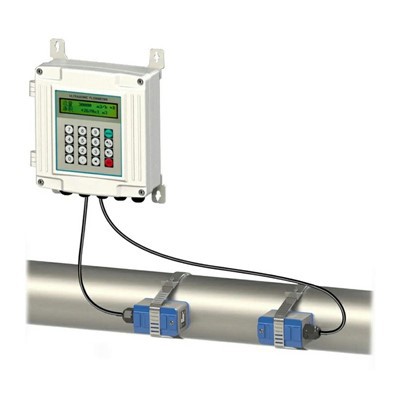
If you’re struggling with measuring flow in a turbulent environment, don’t worry! Our team of experts is here to help. We’ve got the experience and the technology to ensure that our radar flow meters can perform well even in challenging conditions.
Pressure & Temperature Transmitter If you’re interested in learning more about our radar flow meters or want to discuss how we can help with your specific application, feel free to reach out. Whether it’s a small – scale stream or a large – industrial channel, we’ve got the solutions you need.
References
- Chow, V. T. (1959). Open – Channel Hydraulics. McGraw – Hill.
- Krauss, R. (2005). Fluid Mechanics for Civil and Environmental Engineers. Wiley.
- Henderson, F. M. (1966). Open Channel Flow. Macmillan.
Dalian Yheng Technology Co., Ltd.
Dalian Yheng Technology Co., Ltd. is one of the leading radar flow meter manufacturers and suppliers in China, also supports customized service. We warmly welcome you to buy high quality radar flow meter in stock here from our factory. Contact us for more details.
Address: F1605, NO.10 Huoju road, High-tech Industrial Zone, Dalian, China
E-mail: admin@dlyheng.com
WebSite: https://www.yhengphmeter.com/
