Pressure is a critical environmental factor that significantly impacts the performance and application of electromagnetic flow meters. As a supplier of electromagnetic flow meters, understanding how pressure affects these devices is essential for providing accurate technical support and high – quality products to our customers. Electromagnetic Flow Meter
1. Basic Working Principle of Electromagnetic Flow Meters
Before delving into the influence of pressure, it’s necessary to understand the basic working principle of electromagnetic flow meters. These flow meters operate based on Faraday’s law of electromagnetic induction. When a conductive fluid flows through a magnetic field generated by the flow meter, an electromotive force is induced. The magnitude of this electromotive force is proportional to the average velocity of the fluid and the strength of the magnetic field. This induced electromotive force is measured by electrodes installed in the flow tube, and the flow rate of the conductive fluid can be calculated based on this measurement.
2. Direct Physical Impact of Pressure on the Structure of Electromagnetic Flow Meters
2.1 Effects on the Flow Tube
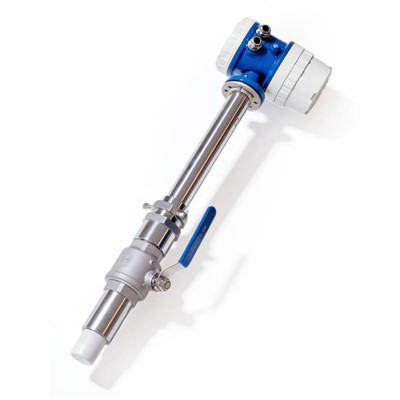
Pressure directly affects the flow tube of an electromagnetic flow meter. The flow tube needs to withstand the pressure of the fluid being measured. For electromagnetic flow meters used in high – pressure environments, such as in oil and gas pipelines, if the pressure exceeds the rated pressure of the flow tube, the tube may deform. Even a small deformation can change the cross – sectional area of the flow tube. According to the continuity equation (Q = A\times v) (where (Q) is the flow rate, (A) is the cross – sectional area, and (v) is the average velocity), a change in the cross – sectional area (A) will lead to an error in the flow rate measurement. Our company’s electromagnetic flow meters use high – strength materials for the flow tube, such as stainless steel and high – quality liner materials like PTFE or rubber, which can effectively resist deformation from high – pressure environments. Our R & D team has conducted a large number of tests to ensure the integrity of the flow tube structure under high – pressure conditions.
2.2 Seal Failure Risk
Pressure also has a significant impact on the seals of the electromagnetic flow meter. The seals are used to prevent fluid leakage and ensure the normal operation of the instrument. High pressure can cause the seals to be compressed, and over time, the sealing material may wear out or lose its elasticity. If the seal fails, not only may the fluid leak, which is a safety hazard in some applications such as chemical plants, but also it can lead to inaccurate measurements. The presence of external air or debris entering the flow meter through the leak can interfere with the measurement of the induced electromotive force. Our products are equipped with high – quality seals, and we use advanced sealing technologies to ensure reliable sealing performance under different pressure conditions. For example, we use double – seal design in some high – pressure models to enhance the sealing effect.
3. Impact of Pressure on Fluid Properties Affecting Flow Measurement
3.1 Viscosity Changes
Pressure can affect the viscosity of the fluid. In general, for most liquids, an increase in pressure leads to an increase in viscosity. Viscosity affects the flow characteristics of the fluid. In laminar flow, the relationship between flow rate, pressure drop, and viscosity is described by the Hagen – Poiseuille equation. For turbulent flow, the change in viscosity also affects the flow pattern and the distribution of the velocity profile. Since the electromagnetic flow meter measures the average velocity of the fluid, changes in the velocity profile due to viscosity changes can lead to measurement errors. Our technical team has developed calibration algorithms that can compensate for the influence of pressure – induced viscosity changes on flow measurement. Through a large number of experiments, we have established a database of viscosity – pressure relationships for different fluids, which allows us to provide more accurate measurement results.
3.2 Conductivity Variation
The conductivity of a fluid can also be affected by pressure. Some conductive fluids may experience changes in conductivity under high – pressure conditions. Since the electromagnetic flow meter’s measurement principle is based on the induction of electromotive force in a conductive fluid, a change in conductivity can affect the magnitude of the induced electromotive force and thus the accuracy of the flow measurement. Our electromagnetic flow meters are equipped with conductivity compensation functions. We use advanced sensors and algorithms to monitor and adjust the measurement results according to the real – time conductivity changes of the fluid under different pressure conditions.
4. Influence of Pressure on Sensor Performance
4.1 Signal Interference
High – pressure environments may generate mechanical vibrations and electrical noises. These vibrations can be transmitted to the electrodes of the electromagnetic flow meter, causing interference with the measurement of the induced electromotive force. In addition, high – pressure electrical equipment in the vicinity may also generate electromagnetic interference. To solve this problem, our products use anti – vibration and anti – interference design. The flow meters are equipped with shock – absorbing devices to reduce the impact of mechanical vibrations. And we use shielded cables and advanced signal processing algorithms to filter out electrical noise and electromagnetic interference, ensuring the stability and accuracy of the measurement signal.
4.2 Sensor Long – term Stability
Continuous high – pressure operation can also affect the long – term stability of the sensor. The components of the sensor, such as the coils and electrodes, may be affected by the stress caused by pressure. Over time, this can lead to changes in the electrical properties of the sensor, such as resistance and inductance. These changes can gradually accumulate and cause measurement errors. Our company conducts long – term aging tests on the sensors under different pressure conditions to ensure that they can maintain stable performance over a long service life. We also regularly update and improve the sensor design to enhance its pressure resistance and long – term stability.
5. Application and Selection of Electromagnetic Flow Meters in Different Pressure Environments
5.1 Low – Pressure Applications
In low – pressure applications, such as water supply systems in buildings or small – scale industrial processes, the influence of pressure on electromagnetic flow meters is relatively small. Our low – pressure electromagnetic flow meters have a simple and cost – effective design. They are mainly focused on providing accurate and stable flow measurement. We use appropriate materials and sealing structures to ensure the durability of the products in these low – pressure environments.
5.2 High – Pressure Applications

For high – pressure applications, such as in the oil and gas industry or high – pressure chemical processes, more stringent requirements are placed on electromagnetic flow meters. Our company has developed a series of high – pressure electromagnetic flow meters. These products are designed with thick – walled flow tubes and high – performance sealing materials. They are also equipped with advanced pressure – resistance sensors and compensation algorithms to ensure accurate and reliable flow measurement in high – pressure environments.
Conclusion
Turbine Flow Meter As a professional electromagnetic flow meter supplier, we are well – aware of the various impacts of pressure on electromagnetic flow meters. Through continuous research and development, we have developed a series of products with high – pressure resistance, high accuracy, and long – term stability. If you are in need of electromagnetic flow meters for different pressure applications, whether it’s low – pressure or high – pressure environments, our team of experts is ready to provide you with the most suitable solutions. We have a wealth of experience in the field of flow measurement and are committed to delivering high – quality products and excellent customer service. To discuss your specific requirements and initiate a potential purchasing contract, we encourage you to contact us. Our sales representatives are eager to engage in productive discussions with you and help you find the ideal electromagnetic flow meter for your needs.
References
- "Flow Measurement Handbook" by Richard W. Miller.
- "Electromagnetic Flow Meter Technology and Applications" published by the Instrument Society of America.
- Goretti, A., & Scardovelli, R. (2019). "Numerical simulation of fluid flow in complex geometries under varying pressure conditions." Journal of Computational Fluid Dynamics.
Dalian Yheng Technology Co., Ltd.
Dalian Yheng Technology Co., Ltd. is one of the leading electromagnetic flow meter manufacturers and suppliers in China, also supports customized service. We warmly welcome you to buy high quality electromagnetic flow meter in stock here from our factory. Contact us for more details.
Address: F1605, NO.10 Huoju road, High-tech Industrial Zone, Dalian, China
E-mail: admin@dlyheng.com
WebSite: https://www.yhengphmeter.com/
