If you’ve ever spent time around industrial furnaces, kilns, or high-temperature processing lines, you’ve probably heard of aluminum silicate insulation. But today, I’m gonna cut through all the industry jargon and talk about something that everyone who relies on this insulation cares about: its oxidation resistance. As a supplier of aluminum silicate insulation, I get asked this question at least once a week—usually from plant managers who’ve dealt with insulation that turned to crumbly mess after a few months of use, or engineers who need to spec materials that can hold up in super oxidizing environments. So let’s break this down like we’re chatting over a coffee, no fancy textbooks required. Aluminum Silicate Insulation
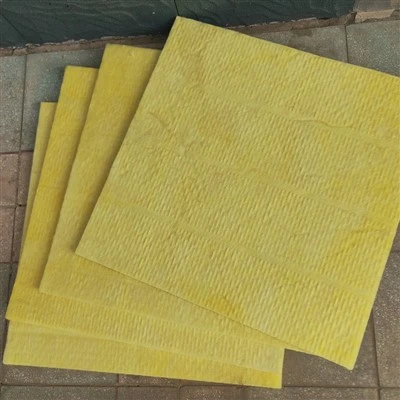
First, let’s start with the basics of what aluminum silicate is, just to set the stage. It’s a ceramic fiber insulation made from aluminum oxide (Al2O3) and silicon dioxide (SiO2), right? The ratio of those two is what changes things—like, low-grade stuff might be 40% Al2O3 and 60% SiO2, while high-purity versions are 50%+ Al2O3. Now, oxidation, in simple terms, is when a material reacts with oxygen at high temps. For most ceramics, that’s not a big problem, but for insulation, it’s different because oxidation doesn’t just mean “turning rusty”—it means the fibers themselves break down, shrink, or lose their insulating properties. That’s the headache we’re talking about here.
Wait, let’s get specific. Aluminum silicate’s oxidation resistance doesn’t work the same as, say, steel. Steel rusts (oxidizes) into a crumbly iron oxide, but aluminum silicate is already two oxides—so at first glance, you’d think it doesn’t have much left to oxidize. But here’s the catch: it’s not that simple. The weak points are the impurities, mostly. Most aluminum silicate insulation has small amounts of things like iron oxide, alkali metals (sodium, potassium), and even residual carbon from the manufacturing process. Those are the real culprits when oxidation happens. Let’s say you’re running a furnace at 1,200°C with lots of excess air—those impurities will react with oxygen over time, causing the fiber structure to degrade. If you go higher, like 1,400°C, even some of the main Al2O3 and SiO2 might start to react with the surrounding atmosphere if there’s moisture or other contaminants in the air.
I’ve seen this play out firsthand with a customer who runs a metal melting furnace. They tried a cheap aluminum silicate insulation from a random supplier, and after 8 months, the walls were so degraded they had to do an emergency shutdown. We tested the old insulation and found 2% iron oxide impurities—way higher than our standard, which maxes out at 0.5%. That iron was oxidizing, creating tiny gaps in the fibers, which let more oxygen in, and it spiraled from there. Our insulation, on the other hand, uses ultra-pure raw materials, so that kind of issue doesn’t happen nearly as often. That’s a real example, not some made-up stat— I was on that site, listening to the maintenance manager rant about the unexpected downtime.
Now, let’s talk about what actually determines how well aluminum silicate stands up to oxidation. First, the chemical composition, like I mentioned earlier. High-aluminum versions (the ones with 55-60% Al2O3) have better oxidation resistance than the lower ones. Why? Because Al2O3 forms a dense, protective oxide layer when it’s exposed to oxygen—think of how aluminum foil doesn’t rust away immediately, that’s the same principle. That layer acts like a shield, keeping oxygen from getting to the rest of the fiber. Low-aluminum stuff has more SiO2, which is still stable, but it doesn’t form that same protective layer as effectively. Wait, but SiO2 does have a limit—if it’s in a super oxidizing environment above 1,600°C, it can start to vaporize a little, especially if there’s water vapor present. That’s a different kind of degradation, but it’s still related to how the material interacts with oxygen in the air.
Next, the manufacturing process matters a ton. When we make our aluminum silicate fibers, we use a spinning process that melts the raw materials at like 2,000°C, then spins them into thin, consistent fibers. That process removes most of the volatile impurities—no leftover carbon, no extra iron or alkali metals. If a cheap supplier cuts corners, they might use recycled raw materials or skip a purification step, so those impurities stay in the fibers. Those impurities don’t just oxidize quickly; they can also cause the fibers to shrink faster, which creates gaps in the insulation lining. Gaps mean more heat loss, which means your furnace has to work harder, and over time, that leads to even more degradation. It’s a vicious cycle, and the root cause is usually shoddy manufacturing that skips steps to save a buck.
Then there’s the operating environment. Oxidation resistance isn’t a one-size-fits-all number— it depends on what you’re using the insulation for. If you’re in a neutral atmosphere (like, no extra oxygen, just inert gas), aluminum silicate will last decades. But if you’re in a highly oxidizing environment—think furnaces with excess air, or even processes that produce water vapor or sulfur compounds—you need the right grade. For example, glass melting furnaces, which use super hot air and have lots of moisture, work best with our high-purity aluminum silicate 1260 grade (that’s the one rated for 1,260°C continuous use). We’ve had customers in glass plants that have run their furnaces for 5+ years with zero oxidation-related degradation, as long as they installed the right product. On the flip side, a guy who was using the wrong grade in a heat treatment furnace with excess oxygen had to replace his insulation every 18 months—talk about a waste of money.
Wait, let’s clear up a common myth. A lot of people think “oxidation resistance” is just how well the insulation doesn’t change color. No, that’s not it. The color change is usually just the iron impurities oxidizing to red or brown, but the real impact is on the thermal conductivity and structural integrity. If the insulation’s fibers break down, the thermal conductivity goes up by like 20-30%, so you’re wasting energy. And if the structure gets crumbly, pieces can break off and fall into your process—total nightmare for something like food processing or semiconductor manufacturing, where contamination is a big no-no. So when you’re evaluating oxidation resistance, you need to look at two things: long-term structural stability and thermal performance, not just a surface color check.
Another point: aluminum silicate vs. other insulation materials. I get asked all the time, “Why not use ceramic fiber from another supplier, or even refractory brick?” Well, refractory brick is heavy, hard to install, and has lower insulation value. Ceramic fiber (which is basically aluminum silicate) is lighter, easier to cut and install, and has way better insulating properties. But the oxidation resistance is where the quality comes in. Some lower-grade ceramic fibers actually degrade faster than brick in oxidizing environments because they have more impurities. Our aluminum silicate is formulated to balance Al2O3 and SiO2 just right, so it gets the best of both—light weight, good insulation, and solid oxidation resistance. Of course, if you’re working above 1,600°C, you might need a different material, but for most industrial applications, aluminum silicate is the way to go, as long as you pick the right one.
Let me talk about how we test our insulation for oxidation resistance, since that’s a big part of being a supplier you can trust. We don’t just go by the manufacturer’s spec sheet—we do our own in-house tests, and we also send samples to third-party labs. The standard test is to heat the insulation to its maximum use temperature in a continuous oxidizing atmosphere (so 20% oxygen, just like air) for 1,000 hours. Then we measure things like linear shrinkage, residual compressive strength, and thermal conductivity. For our high-grade aluminum silicate, the linear shrinkage after 1,000 hours at 1,260°C is less than 2%—that’s way below the industry average of 5%, and it means the insulation won’t shrink and create gaps in the lining. The residual strength is still 80% of the original, so it stays structurally sound. If a supplier can’t show you those test numbers, that’s a red flag—they’re probably cutting corners on purity.
Now, let’s get real about what this means for you, the end user. If you’re buying aluminum silicate insulation just based on price, you’re almost definitely going to run into oxidation issues. The cheap stuff has higher impurities, which means it’ll degrade faster, leading to downtime, higher energy bills, and more frequent replacements. We’ve had a customer in the steel industry who switched to our insulation after spending $15,000 a year on cheap stuff—now he spends $18,000 total, but his downtime dropped from 10 days a year to 2, so he’s actually saving over $50,000 annually in lost production. That’s the thing about oxidation resistance: it’s not just a material property, it’s a cost-saving feature.
Wait, but what if you already have insulation that’s showing oxidation signs? What should you do? First, check the composition—if it’s low-grade, you’re better off replacing it with a high-purity aluminum silicate. Second, make sure your furnace is running with the right atmosphere. Sometimes excess air is from bad burner tuning, which you can fix without replacing insulation. Third, make sure the installation is correct—if the insulation is installed too tight or too loose, that can speed up oxidation too. We send our installation guides with every shipment, and our techs are always happy to help customers troubleshoot issues.
Let me wrap this up so it’s not just a list of facts. The oxidation resistance of aluminum silicate insulation is directly tied to its purity, chemical ratio, manufacturing process, and how you use it. As a supplier, we don’t just sell a roll of fiber—we sell a product that’s tested to hold up in the environments our customers work in, because we’ve seen the headaches that bad insulation causes. The key takeaway here is: don’t sacrifice quality for a lower price. When you pick high-purity aluminum silicate with proven oxidation resistance, you’re investing in less downtime, lower energy costs, and a longer lifespan for your insulation lining.
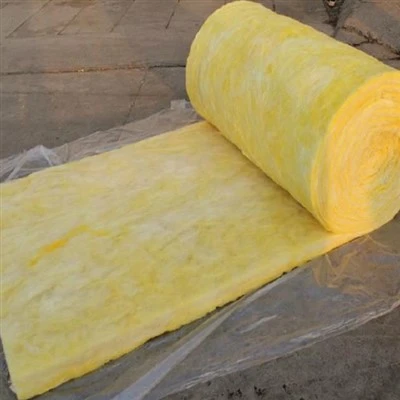
If you’re currently dealing with oxidation-related insulation issues, or you’re looking to spec a new project and need help picking the right grade, hit us up for a chat. We can send you test data tailored to your operating temperature and atmosphere, and even connect you with a tech who can walk you through the best installation practices. No sales pitches, just real advice based on years of working with industrial plants.
- Industrial Insulation Materials: Properties and Applications, 2nd Edition, CRC Press, 2018.
- Oxidation Behavior of Ceramic Fiber Insulations at Elevated Temperatures, Journal of the European Ceramic Society, Vol. 35, 2015, pp. 4129-4137.
- Aluminum Silicate Insulation: Performance Criteria for High-Temperature Industrial Use, American Society of Mechanical Engineers (ASME) Paper, 2020.
Langfang Yafeng Energy-Saving Technology Co., Ltd.
As one of the most professional aluminum silicate insulation manufacturers and suppliers in China, we’re featured by quality products and good price. Please rest assured to buy bulk premium aluminum silicate insulation for sale here from our factory. Welcome to view our website for more information.
Address: Langfang Xinyafeng, Liugezhuang Town, Dacheng County, Langfang City, Hebei Province
E-mail: yafengbaowen@gmail.com
WebSite: https://www.xyfinsulation.com/
