Hey folks, let’s cut the crap—if you’ve been messing around with wind power systems, you know a bad call when you see one. You’ve got blades spinning, turbines whirring, and then boom—electrical noise popping up, or worse, ground faults tripping your whole setup before it even gets to the grid. That’s where isolation transformers come in, right? But here’s the thing: not just any random isolation transformer will do for wind power. I’m the guy who sells these things, so I’ve talked to a hundred wind techs, project managers, and even a couple of field engineers who burned their hands on a mismatched unit. Let’s break down exactly what you need to actually get this right, no sales fluff, just the real stuff we see every day. Isolation Transformer
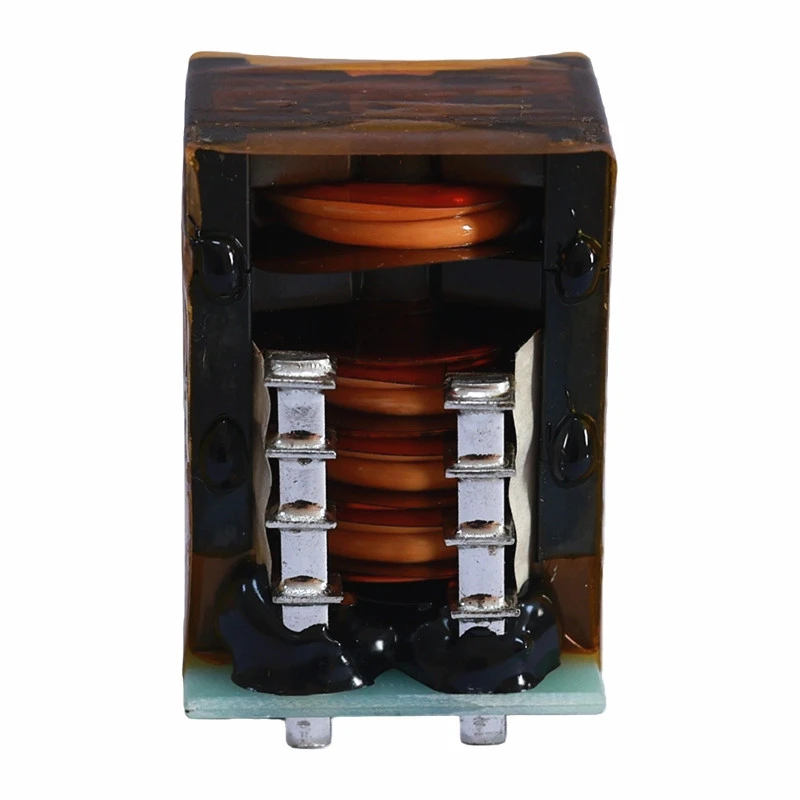
First off, let’s get the basics straight—wait, no, not the textbook basics, the wind-specific basics. A wind power system’s no regular commercial building. You’ve got the turbine’s generator pumping out power that bounces around (we call that variable voltage and frequency, thanks to wind speed shifting from a breeze to a gale), then you’ve got the collection system that carries juice from 10 or 20 turbines back to the substation, and finally stepping that up to feed the grid. Isolation transformers do two big jobs here: they block DC from getting into the grid (super important, grids hate DC), and they cut down on electrical noise that messes with turbine sensors and control systems. But if you skip a requirement, you’re looking at downtime that’ll cost you way more than the transformer itself.
Let’s start with the first non-negotiable: voltage and power rating matching. Wait, not just matching—double check matching. Turbine generators (especially permanent magnet ones, which are everywhere now) put out low-voltage AC, like 480V or 690V, right? But the collection line might be medium-voltage, like 15kV or 25kV. If I see a tech grab a standard isolation transformer rated for, say, 600V primary and 12kV secondary for a 690V turbine feeding a 10kV collection line, that’s a red flag. Why? Because if the primary can’t handle the 690V steady plus the spike when wind hits 30mph, it’ll overheat—fast. And power rating? Don’t round up “just in case.” I’ve had a project where a 1MW turbine used a 1.2MW transformer, worked on paper, but when wind picked up, the transformer’s core got saturated, noise spiked, and the turbine’s pitch control sensors fried. You need a transformer rated for the full continuous power output of the turbine plus a 10-15% overload buffer for gusts. That buffer’s not overkill—it’s insurance when the wind’s not playing nice.
Next up: insulation and durability. Wind farms are rough. I’m talking salt spray off coastal sites, dust and humidity in desert farms, temperature swings from -40°F to 120°F in mountain areas. A regular indoor isolation transformer’s insulation will crack in two years, guaranteed. What you need is Class H or Class F insulation—Class H is better for extreme temps, it can handle 180°C without breaking down. And don’t skimp on the enclosure. If it’s going on a turbine’s nacelle (the big box on top with the blades), it needs an IP rating of at least 54—dust-tight and protected against spray from any direction. For ground-mounted units at the substation, IP55 minimum, because rain and snow aren’t your friend either. I once worked with a wind farm in West Texas that used a random transformer off a shelving unit; in a year, dust got into the windings, caused a short, took out three turbines, and cost them $80k in downtime. Lesson learned here: insulation and enclosure aren’t add-ons, they’re requirements.
Then there’s the isolation level. This is where a lot of folks get confused. Isolation transformers have a “hi-pot” rating, basically how well they block voltage between primary and secondary. For wind systems, you need at least 2.5kV of isolation per kV of system voltage, but wait—hold up, that’s for normal systems. For the turbine-to-collection line link, it’s higher, like 3.5kV. Why? Because variable frequency drives (VFDs) in wind turbines (used to adjust blade speed) create what’s called common-mode noise. That noise flows to ground, and without enough isolation, it can mess with the grid’s grounding system. I had a client in the Midwest who didn’t upgrade the isolation level—their grid operator flagged their power as “noisy,” made them pay a fine, and they had to swap out every turbine transformer. Ouch. Also, make sure it’s a galvanic isolation, not just a capacitively coupled one. Capacitive ones let too much noise through, and wind systems live and die by clean control signals.
Grounding is another big one. Wait, I said it’s an isolation transformer—doesn’t mean you can skip grounding it. A lot of people think “isolation means no ground connection,” no, that’s not how it works. You need a proper grounding electrode for the transformer, sized for the full fault current of the system. For wind farms, that’s usually a 4/0 copper ground wire, connected to the turbine’s main grounding system and the collection line’s ground. If you don’t ground it right, when a ground fault happens (like if a lightning strike hits the turbine), the voltage can jump to dangerous levels, and your electronics will take the hit. I’ve seen lightning take out a whole turbine’s control panel because the transformer’s ground was too small. Also, make sure the grounding point is far away from power lines to avoid inductive interference—common mistake in tight turbine arrays.
Now, frequency rating. Wind turbines don’t run at 60Hz or 50Hz 24/7. They adjust generator speed based on wind, so the frequency jumps around from, say, 40Hz to 70Hz. A standard isolation transformer is rated for a single frequency (like 60Hz), and it’ll lose efficiency big time if you run it off-frequency. We test all our wind-specific transformers to handle variable frequency ranges up to 120% of the rated frequency, so they don’t overheat or have high core losses when the turbine’s ramping up. A client in Canada tried a standard transformer for a 50Hz turbine running at 55Hz in high wind—after three months, the efficiency dropped 12%, their operating costs went up, and they were losing power before it even hit the grid. That’s the kind of avoidable mistake we hear about all the time.
Wait, let’s talk about harmonics too. Wind systems have tons of harmonics, thanks to VFDs, generators, and rectifiers. Harmonics distort the sine wave, and they can cause overheating in transformers, motors, and even the grid’s main transformers. What do you need here? A transformer with a low impedance, or even one with a K-factor rating. K-factor transformers are designed to handle harmonic loads without overheating. For wind farms, K-factor 4 or higher is standard—our most popular model for turbine use is K-factor 6, which handles the heavy harmonic load from VFDs. I can’t tell you how many times a project switched to a non-K-factor transformer, only to have overheating issues in summer. The harmonic load cranks up, the transformer’s internal temp goes 20°F over what it’s rated, and boom—failure.
Oh, and installation compatibility. You can’t just plop a big transformer in a tiny nacelle. Turbine nacelles have limited space, so you need a transformer that’s compact, designed for roof-mounted or nacelle installation, with vibration-resistant components. Turbines vibrate like crazy when blades are spinning—regular transformers have windings that’ll work loose over time. We use epoxy-coated windings and heavy-duty terminal blocks that can handle vibration up to 10G, which is the standard for wind turbines. If a tech buys a standard floor-standing transformer, it’ll rattle apart within a year. I’ve had a client in Scotland where that happened—they had to replace 12 transformers in one winter, total cost was way more than getting the right unit the first time.
Wait, let’s wrap this up with a quick real check—let’s say you’re working on a 2MW, 690V turbine feeding a 10kV collection line. What’s your list of non-negotiables? 1) Voltage rating: 690V primary, 10kV secondary, power rating of 2.2MW (10% buffer for gusts). 2) Insulation: Class H, IP54 enclosure for nacelle. 3) Isolation level: 3.5kV per kV of system, so 35kV hi-pot. 4) Grounding: 4/0 copper, proper electrode tied to turbine ground. 5) Frequency rating: 40-70Hz, variable frequency compatible. 6) K-factor: K4 minimum, K6 if you have a VFD-heavy setup. 7) Vibration resistance: 10G, compact nacelle-mounted. That’s it. Skip any of these, and you’re setting yourself up for downtime, extra costs, or grid issues.
Now, as someone who’s been in this game for years, I’ll be real—there’s no shortcut here. Wind power’s growth is huge, but it’s also unforgiving if you cut corners on components. Too many guys go for the cheapest transformer, not the right one, and then they’re stuck fixing avoidable problems. I’m not here to sell you something you don’t need, but I am here to make sure you get exactly what your wind system needs to run smoothly. If you’re working on a project, have questions about specs, or need to size a transformer for a specific turbine setup, hit us up to talk through it. No sales pitch, just actual advice based on years of working with wind teams and knowing what works in the field. Don’t let a bad transformer kill your turbine’s output—get the right one the first time.
High Frequency Transformer References
Wind Turbine Generator System Power Quality Requirements: IEEE Standard 1547
Isolation Transformer Design for Variable Frequency Loads: Department of Energy (DOE) Wind Energy Program Technical Report
Insulation Coordination for Renewable Energy Systems: International Electrotechnical Commission (IEC) 61892
Dongguan Hensiron Electric Co., Ltd.
As one of the most professional isolation transformer suppliers in China, we have world-leading production equipment and strong manufacturing capabilities. Please feel free to buy high quality isolation transformer made in China here from our factory. Customized orders are welcome.
Address: Building 4, Xinxing Industrial Zone, Wangao Road, Wanjiang Street, Dongguan City, China
E-mail: jessica@dghensiron.com
WebSite: https://www.dghensiron.com/
